Loading...
Paro
Rinpung Dzong (Paro Dzong)
SpiritualityConnectionAweReflection
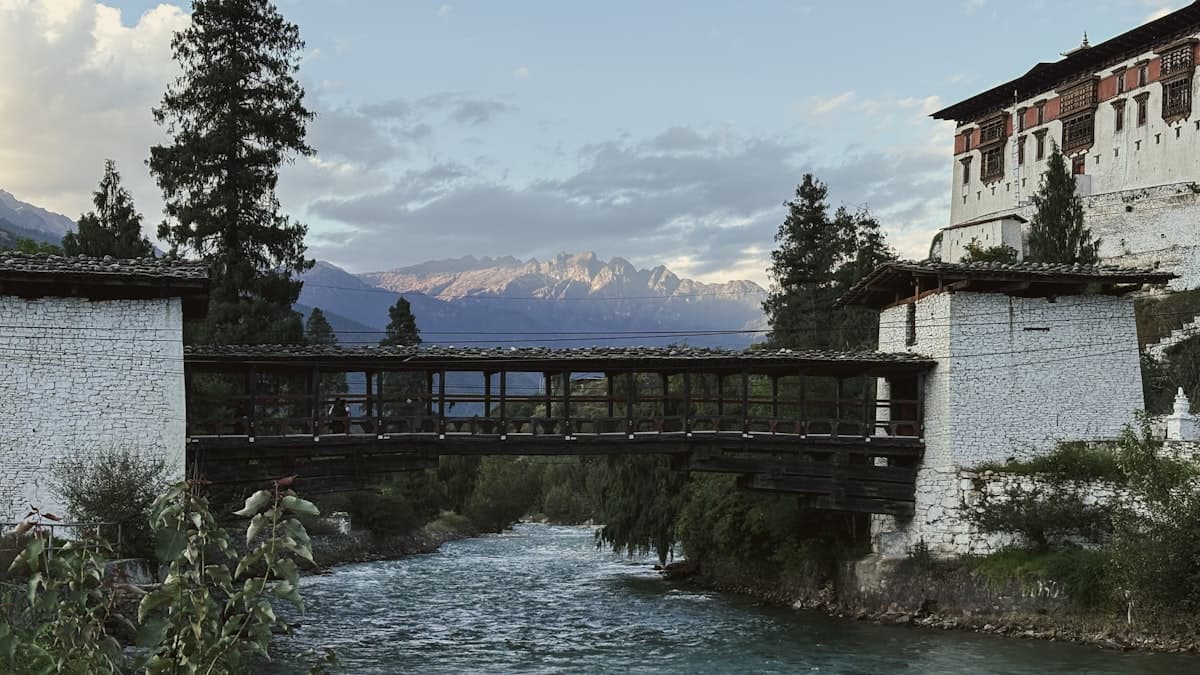
You cross the covered bridge and the world changes. The river roars beneath the wooden floorboards. Prayer flags hang in the darkness above you. The light at the far end is golden. Your footsteps echo against centuries-old timber and then you step into a courtyard so large and so silent that your breathing adjusts itself without being asked.
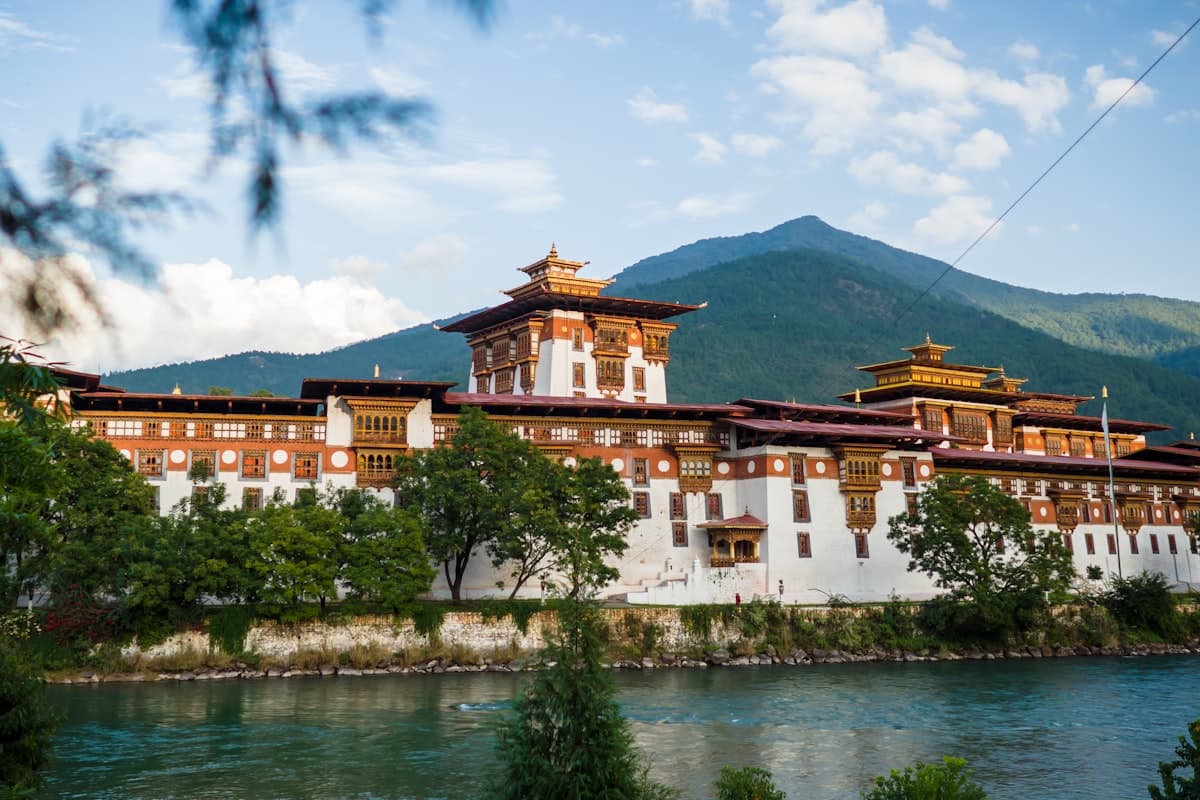
Rinpung Dzong is a fortress. It was built in 1646 to defend the Paro Valley, and it still looks like something that could hold. The walls are massive — whitewashed stone sloping inward as they rise, windowless for the first two storeys. But the fortress is also a monastery. Monks live here. They pray here. The enormous courtyard, paved in smooth stone and framed by carved wooden galleries, is where the Paro Tshechu unfolds each spring — one of Bhutan's most important festivals, with masked dancers and thousand-year-old rituals performed to an audience of the entire valley.
Inside, the prayer halls are dim. Butter lamps glow in rows, their flames perfectly still in the windless air. Ancient murals cover every surface — figures in gold and red and deep blue, their eyes following you through the darkness. The smell is juniper incense and old wood and the faintest trace of melted butter. Monks sit cross-legged on low cushions, chanting in a register so deep it vibrates in your chest rather than reaching your ears.
You leave through the same covered bridge. The river is louder now, or perhaps you are quieter. The town waits on the other side, small and ordinary. But you have been inside something that is neither small nor ordinary, and it takes a while for the feeling to fade.
Sensory Profile
Noise Level
Crowd Level
Brightnessdim inside prayer halls (butter lamp light only), bright in courtyard
Temperaturecool (stone interiors hold cold even in warm weather)
SmellsJuniper incense, butter lamps, old wood, cold stone, river water from the covered bridge
Unexpected SoundsDeep chanting from monks. Sudden bell sounds in prayer halls. River roar amplified inside the covered bridge. Festival drums during Tshechu season.
Walking Difficultyeasy
Social ExpectationsRemove shoes inside prayer halls. No photography in some areas. Dress modestly. Walk clockwise. Silence in active prayer halls. The covered bridge requires no etiquette — simply walk.
Quiet SpacesYes
Best Time (Low Stimulation)Late afternoon when tour groups have left. Avoid Tshechu festival days if you are sensory-sensitive (extremely high stimulation).
Sensory data informed by clinical neurodevelopmental expertise.

Mindfulness Activity
The Fortress That Prays
Four prompts moving from the covered bridge into the heart of a fortress-monastery built in 1646.
Grounding and sensory. A way in.
- 1
The Bridge
The covered wooden bridge crosses the river in near-darkness, prayer flags hanging above, the roar of water amplified by the timber enclosure.
On the covered bridge. Pause halfway across.
Place your hand on the wooden railing. Notice its temperature, its texture, the grain beneath your fingers. How many hands have touched this exact spot before yours? Listen to the river — does it sound louder inside this bridge than it did from outside?
- 2
The Courtyard
A vast paved space enclosed by whitewashed walls and carved wooden galleries, open to the sky, designed to make you feel both small and held.
In the main courtyard. Stand still in the centre before walking anywhere.
Look up. How much sky can you see? Now look at the walls, the columns, the gallery rows. Notice how the proportions hold you — not cramped, not exposed. What does it feel like to stand in a space that was designed for exactly this: a human being, standing still?
- 3
The Prayer Hall
Dim rooms lit only by rows of butter lamps, ancient murals in gold and deep blue, the scent of juniper incense, the resonance of low chanting.
Inside a prayer hall. Sit for at least three minutes.
Close your eyes. Notice what reaches you first — the warmth of the butter lamps on your face, the incense entering your lungs, or the low vibration of chanting in your chest. Let each sensation arrive without chasing it. Which one stays longest?
- 4
The Detail
One thing to carry with you — not in a photograph, but in the body.
Before you leave the dzong. Pause and choose one detail.
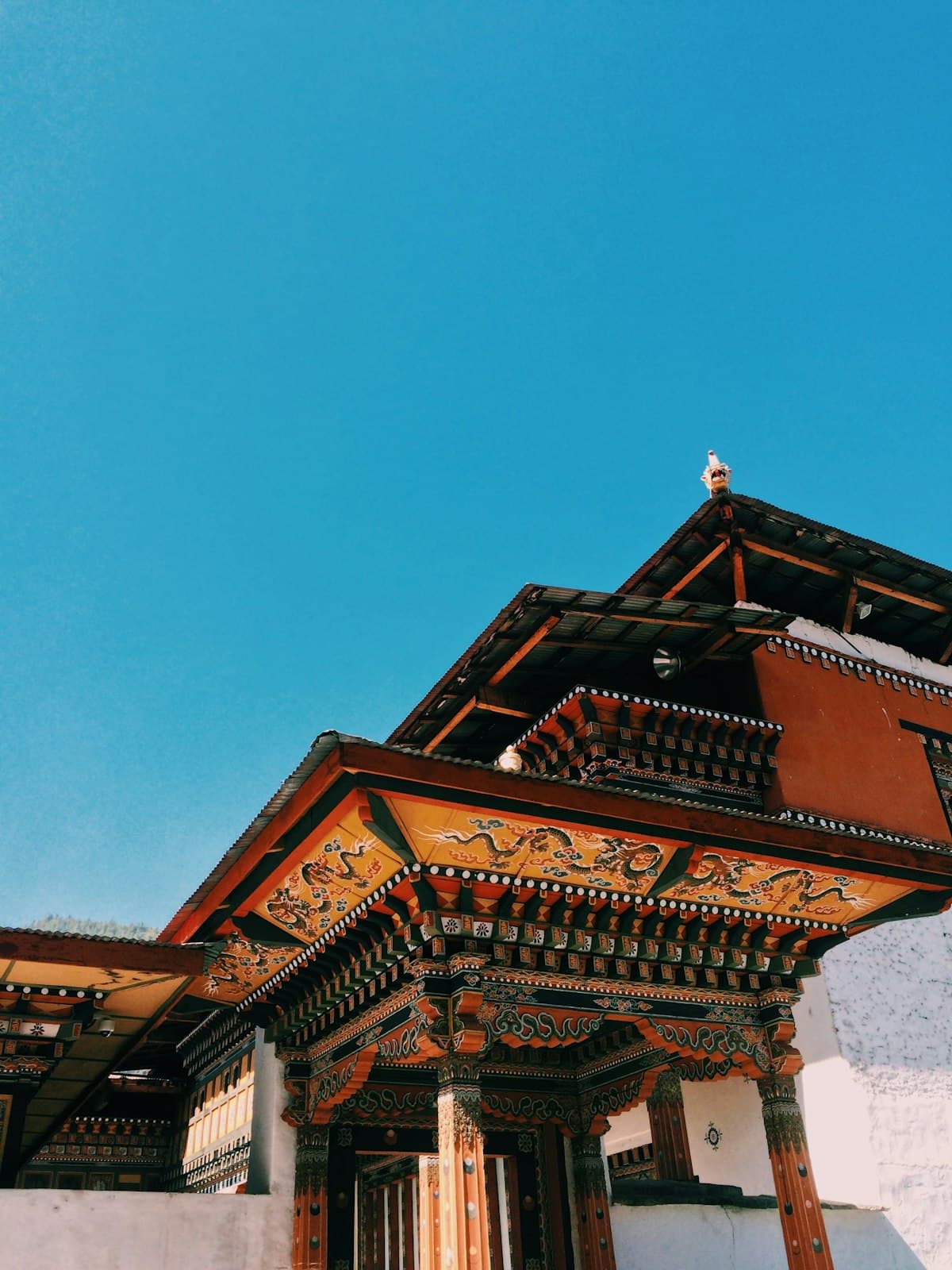
Find one small detail you want to remember — a carved doorframe, a patch of light on stone, the sound of robes on a corridor floor. Look at it for ten seconds. Close your eyes and see it again. That image is yours now.
For Curious Minds
Paro Dzong rewards the curious mind because it is not a museum. It is alive. Monks live and pray inside its walls. Festivals still fill its courtyard. The architecture is engineered for both defence and devotion, and every surface holds a detail that most visitors walk past without noticing.
- •Covered Bridge Investigation: The nyo-zam (traditional covered bridge) is an architectural marvel. How is it constructed? What holds it up? How does the sound of the river change as you walk from one end to the other? Why is it covered? Find the answers before you cross.
- •Courtyard Geometry: Stand in the centre of the main courtyard and study the proportions. Count the columns. Count the gallery levels. The dzong is built on a specific geometric system — symmetry with intentional variations. Find three places where the symmetry breaks.
- •Mural Detective: In the prayer halls, the murals tell stories. Without a guide, try to identify three recurring figures. Guru Rinpoche appears in eight manifestations — how many can you find? Each carries different objects and wears different colours.
- •Sound Hunt: At five different points inside the dzong — the bridge, the courtyard, a prayer hall, a corridor, the exit — stop for 30 seconds and catalogue every sound. The dzong has a completely different soundscape in each space.
- •Festival Imagining: If you visit outside festival season, stand in the courtyard and imagine it filled with masked dancers, drums, and the entire Paro Valley watching. The space transforms. Ask your guide to describe what happens where — which dances occur, where the audience sits, where the thongdrel is unfurled at dawn.
Regulation Suggestion
If the dim prayer halls feel confining, return to the courtyard. The sky is open above and the scale is calming. If the dzong feels too static, walk the perimeter — the views of the Paro Valley from different angles change constantly. The covered bridge can be crossed multiple times; each crossing feels different.