Loading...
Paro Valley
Tiger's Nest (Paro Taktsang)
AweCourageSpiritualityHope
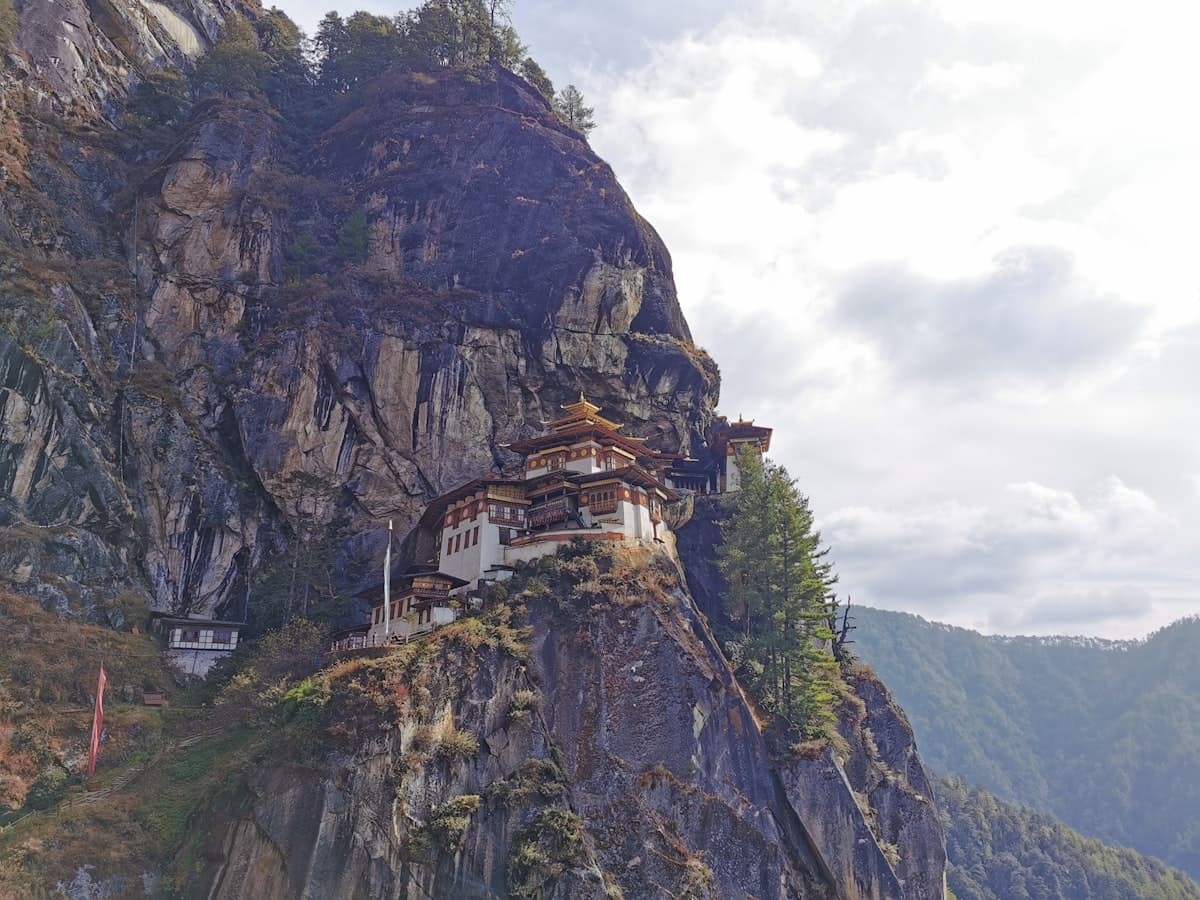
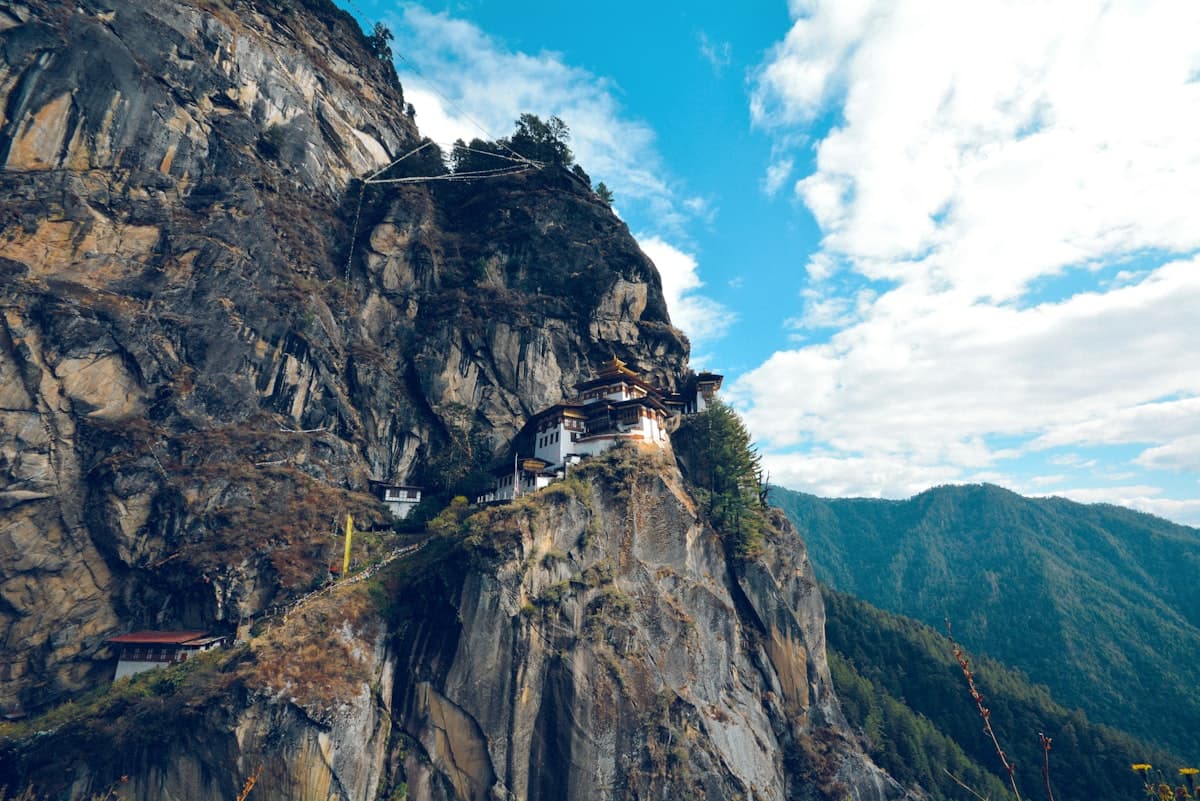
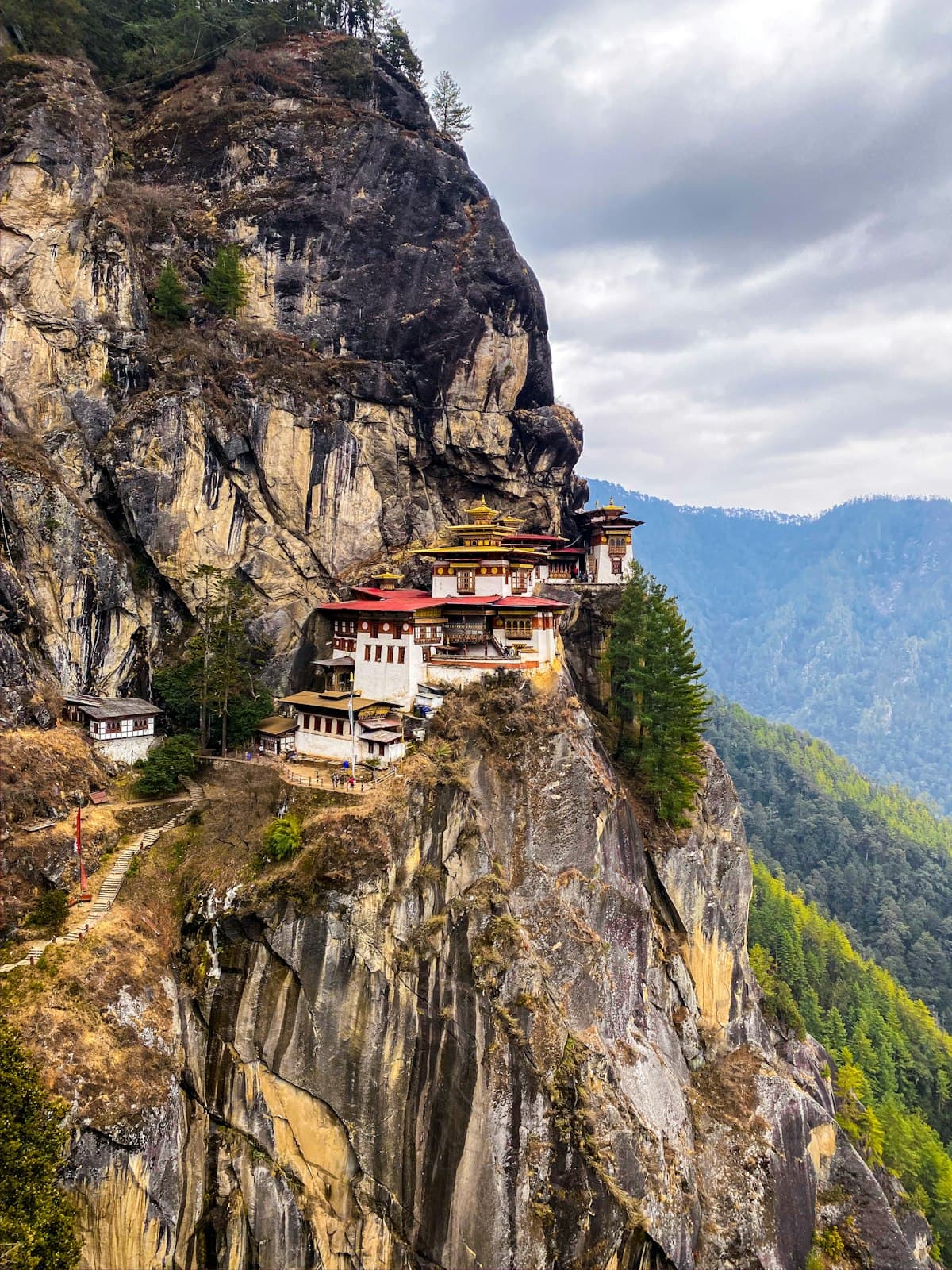
You see it before you believe it. A white monastery pressed into the face of a cliff, three thousand feet above the valley floor, as if placed there by something that does not obey gravity.
The trail begins in pine forest. The air smells of resin and damp earth. You hear birds, wind, and the distant snap of prayer flags higher up. Your body starts to work. The path steepens. Breathing deepens. The altitude is noticeable — you are already at 2,600 metres, and you are climbing. The first hour is forest. Pine needles underfoot, rhododendron branches brushing past. You pass prayer wheels set into small shrines beside the path. Other climbers move slowly ahead and behind you. Horses carry those who cannot walk, but only to the halfway point. Beyond that, everyone climbs.
At the cafeteria, the world opens. You see the monastery clearly now, impossibly close, impossibly suspended. Tea here tastes different. Your legs ache. Something in you has already changed — the effort has burned off the noise. You are more present than you were at the bottom. The second half is steeper. Stone stairs, narrow paths, a descent into a gorge where a waterfall tumbles beside a prayer-flag-draped bridge. Then the final climb — steep, breathless, ancient steps worn smooth by centuries of pilgrims. And then you arrive.
Inside, you remove your shoes. The floors are cold stone. Butter lamps glow in dark alcoves. Monks sit in quiet prayer. The eight temples are small, intimate, dense with devotion. You are standing in the place where Guru Rinpoche meditated in the 8th century, carried here on the back of a flying tigress. The legend is impossible. The monastery is impossible. And yet here you are, and here it is.
The descent is easier on the body but harder on the heart. You have been somewhere that asks something of you, and you gave it. That feeling — of having earned a sacred place — does not leave quickly.
Sensory Profile
Noise Level
Crowd Level
Brightnessbright outdoors, dim inside monastery
Temperaturecool to cold (altitude 2,600–3,120m)
SmellsPine resin, damp earth, juniper incense, butter lamps, cold stone
Unexpected SoundsMonastery bells, monks chanting, waterfall near the bridge, horse hooves on lower trail
Walking Difficultyhard
Social ExpectationsRemove shoes inside monastery. No photography inside. Dress modestly. Silence expected in temple rooms.
Quiet SpacesYes
Best Time (Low Stimulation)Before 8am (trail opens at 8am for monastery entry, but you can begin walking earlier). Quietest before 9am. Avoid 10am–2pm.
Sensory data informed by clinical neurodevelopmental expertise.

Mindfulness Activity
The Climb as Teacher
A 4-hour pilgrimage climb through pine forest to an impossible cliff monastery, where physical effort becomes emotional alchemy.
Grounding and sensory. A way in.
- 1
The Trailhead
The path begins in pine forest with the monastery visible above — impossibly high, impossibly still.
Before you begin the climb, standing at the base
Look up at the trail disappearing into the trees. Notice three things you can see, two things you can hear, and one thing you can smell. Which of those six things feels most like how you feel right now?
- 2
The Forest
The trail climbs through blue pine and rhododendron. The canopy filters everything — light, sound, the weight of what you carry.
During the first hour, in the pine forest section
Pause. Listen for the furthest sound you can hear and the closest sound you can hear. Now notice the one in between. Let your breathing match the pace of the middle sound.
- 3
The Halfway Point
The cafeteria clearing where most people stop. The monastery is closer now, but the climb is only half done.
At the cafeteria, looking across at the monastery
Hold your tea with both hands. Feel the warmth. Look at the monastery across the gorge. Notice the distance between where you are and where it is. Just notice it — do not measure it.
- 4
The Monastery
You have arrived. The monastery clings to the cliff face, eight hundred metres above the valley floor. The air is thin and very still.
Inside the monastery, after removing your shoes
Feel the cold stone under your feet. Notice the glow of butter lamps in the dim room. Breathe in the incense. Let your senses do the work your mind usually does.
- 5
The Descent
The walk down is different. Your body knows the path. Your mind is somewhere else entirely.
On the walk back down through the forest
Notice how the forest feels different going down. The light falls differently. Your body moves differently. Find one thing you did not see on the way up.
For Curious Minds
The climb to Tiger's Nest is extraordinary for ADHD minds because it provides sustained novelty without urban overload: the trail changes constantly, the altitude shifts, the sensory environment transforms, and there are hidden details everywhere.
- •Prayer Flag Counter: Count every distinct set of prayer flags between the trailhead and the monastery. Note where the colours change. There are five colours in a specific order — learn the order and what each colour represents (blue: sky, white: wind, red: fire, green: water, yellow: earth).
- •Sound Hunt: At five different points on the trail, stop for 30 seconds and list every sound you can hear. The list will be completely different at the trailhead, in deep forest, at the cafeteria, at the waterfall bridge, and inside the monastery.
- •Five Things Nobody Notices: Find five details that most climbers walk past without seeing. A particular type of moss. A carved stone. The way light hits the cliff at a certain angle. A bird's nest. The texture of a prayer wheel's handle.
- •Story Unlocks: At three points on the trail, read a short story fragment — at the first prayer wheel shrine: the legend of Guru Rinpoche and the flying tigress; at the cafeteria: the 1998 fire that destroyed the monastery and the seven-year reconstruction; at the bridge: the story of the waterfall and the meditating saint.
- •Movement Challenge: The final 800 stone steps are a natural challenge. Count them. (Most sources say roughly 800. Your count will vary.) Time yourself if you want. Or don't. The point is that your body has something to do while your mind absorbs the arrival.
Regulation Suggestion
If you feel restless or stuck during the climb, increase your pace for 5 minutes. The altitude will force your body to engage fully, which resets attention. If you feel overwhelmed, stop at the cafeteria and spend 20 minutes there — the view is worth the entire climb even if you go no further.
What people felt here
“I sat at the cafeteria and cried. Not because of the view but because my legs carried me here and I had not believed they could.”
📍 Written Here
CourageHope
“The monastery was quieter than I expected. I thought I would feel awe. Instead I felt forgiven.”
📍 Written Here
SpiritualityReflection
“Three months later I still dream about the waterfall near the bridge. I do not know why it stayed with me but it did.”
🕐 Written From Memory
Mystery
“I proposed at the prayer flag viewpoint. She said yes before I finished the sentence.”
📍 Written Here
JoyConnection
“I came here after my father died. For the first time in months, I felt quiet.”
📍 Written Here
GriefCalm