Loading...
Punakha
Punakha Suspension Bridge
JoyFreedomCourageConnection
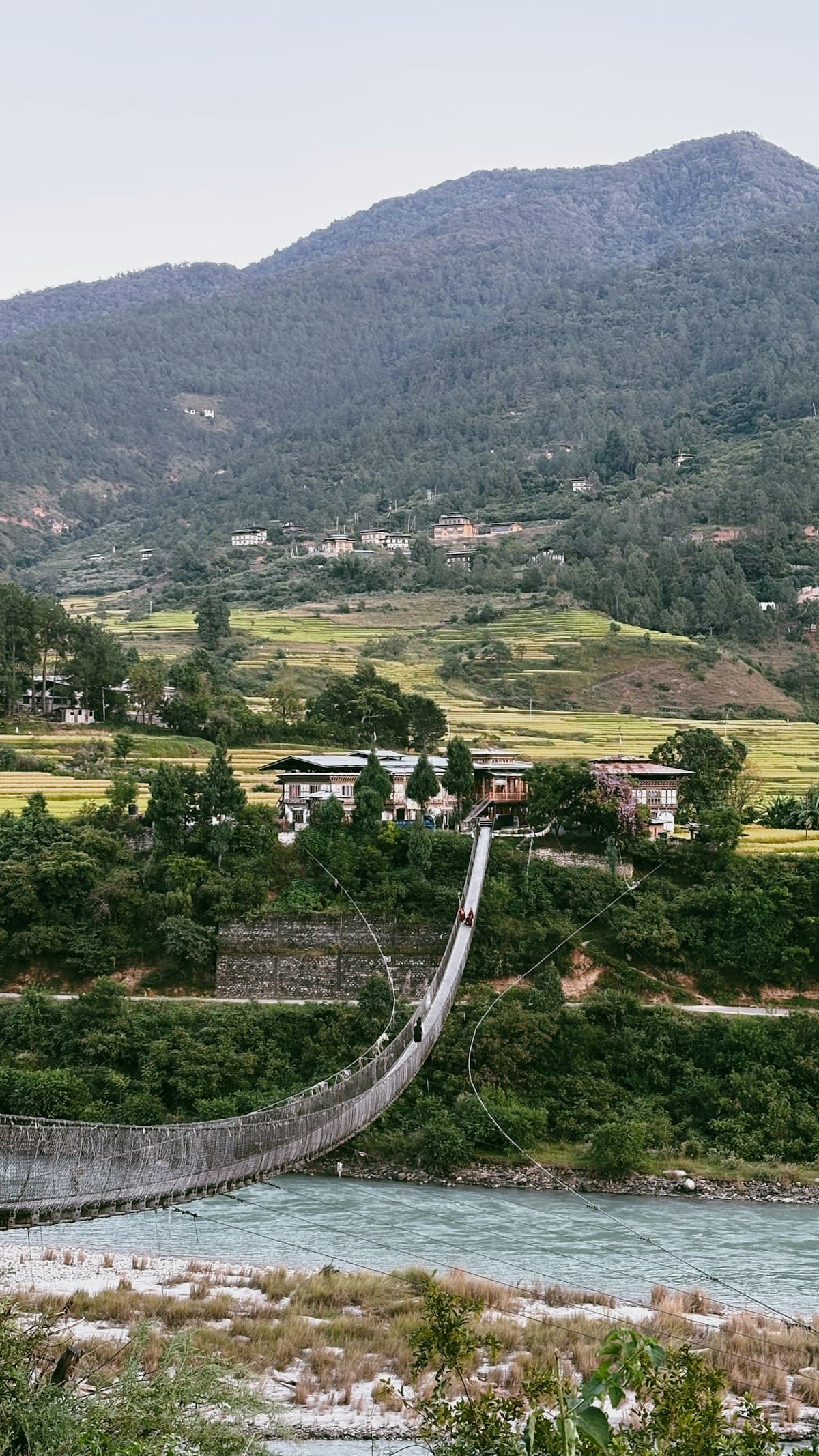
The bridge sways. That is the first thing. It sways, and prayer flags snap above your head, and the Mo Chhu roars turquoise below, and you are suspended between everything you came from and everything you are walking toward.
At 180 metres, the Punakha suspension bridge is one of the longest in Bhutan. It connects the road to Punakha Dzong with the farmland on the other side of the river. Locals cross it daily without thinking. For visitors, the crossing is a five-minute experience that is somehow both exhilarating and tender.
The prayer flags are strung so thickly along the cables that the bridge becomes a tunnel of colour and wind and fabric sound. The wood planks creak underfoot. The handrails are warm from the sun. You can see the river through gaps in the floor.
On the other side, rice paddies stretch toward low hills. Farmers are working. Children are playing. The bridge has delivered you from one world to another. The return crossing feels different — you know the sway now, you trust the bridge, and you walk with a lighter step.
Sensory Profile
Noise Level
Crowd Level
Brightnessbright (open air, river reflection)
Temperaturewarm (low-altitude Punakha Valley)
SmellsRiver water, prayer flag fabric, warm wood
Unexpected SoundsBridge creaking. Prayer flags flapping (loud). River rushing below.
Walking Difficultyeasy
Social ExpectationsNone. Walk across. Walk back.
Quiet SpacesNo
Best Time (Low Stimulation)Early morning or late afternoon when fewer people cross.
Sensory data informed by clinical neurodevelopmental expertise.

Mindfulness Activity
The Crossing as Practice
Four prompts for crossing Bhutan's longest suspension bridge — from the first step to the far side.
Grounding and sensory. A way in.
- 1
The Entrance
You are standing at the threshold, prayer flags snapping above, the bridge swaying before you have taken a step.
Before you step onto the bridge. Stand at the entrance and feel the wind.
Notice three things: the sound of the river, the colour of the prayer flags, and the temperature of the air on your face. Which of these three feels most alive right now?
- 2
The Centre
Halfway across. The bridge moves beneath you. Both sides are equally far away.
At the midpoint of the bridge. Place both hands on the railing.
Feel the vibration through the railing — the wind in the cables, the wood shifting underfoot. Close your eyes for five seconds and let the bridge move you. What does it feel like to stand on something that does not hold still?
- 3
The Water Below
The Mo Chhu flows turquoise beneath the planks, loud and indifferent and beautiful.
Look down through the gaps in the wooden planks at the river below.
Watch the water for thirty seconds. Notice its colour, its speed, the way light moves on its surface. Find one spot where the current changes direction. What does the water sound like from here — a roar, a hum, a rush?
- 4
The Other Side
You have crossed. The rice paddies stretch ahead, and behind you is the bridge you walked.
After you step off the bridge on the far side. Turn around and look back.
Notice how your step feels different now — lighter, more certain, more familiar with the sway. What changed in your body between the first step and this one? Name one thing that feels different.
For Curious Minds
The Punakha suspension bridge is a sensory playground — swaying cables, snapping flags, rushing water, creaking wood, warm sun, and the thrill of crossing something that moves beneath your feet. For an ADHD mind, the bridge provides immediate novelty, physical engagement, and a natural beginning-middle-end structure that makes the experience feel complete without effort.
- •Prayer Flag Tunnel: Count the distinct colours as you cross. The five colours follow a specific order — blue, white, red, green, yellow. Are they consistent along the bridge? Where do they change? How many separate strings of flags can you count?
- •Sound Layers: Stand in the middle of the bridge and close your eyes for 30 seconds. List every sound you can hear — river, wind, flags, wood, birds, voices, your own breathing. How many layers are there? The number is always more than you expect.
- •Sway Physics: Walk at different speeds and notice how the bridge responds. Does it sway more when you walk fast or slow? What happens when you stop suddenly? The bridge is a physics experiment you can feel in your body.
- •Two Crossings: Cross the bridge once as fast as you comfortably can. Cross it back as slowly as you can bear. The same bridge becomes two completely different experiences. Which version do you prefer?
- •Other Side Exploration: On the far side, follow the path into the rice paddies for ten minutes. Find one thing that surprises you — a flower, a sound, a building, a person working. The bridge is the door. The paddies are the room.
Regulation Suggestion
If you feel restless or stuck on the bridge, speed up. The physical act of walking briskly across a swaying surface engages the body fully and resets attention. If you feel overstimulated by the height or the sway, focus on the handrails — grip them, feel their temperature, follow them with your hands. The tactile input grounds the experience.
What people felt here
“Halfway across the bridge I stopped and looked down at the river and thought: I am between everything that happened and everything that will happen. And both directions are beautiful.”
📍 Written Here
HopeFreedom
“My son was terrified to cross. Then he ran across laughing. I want to remember that forever.”
🕐 Written From Memory
JoyCourage