Loading...
Punakha
Punakha Dzong
ConnectionJoySpiritualityAweHope
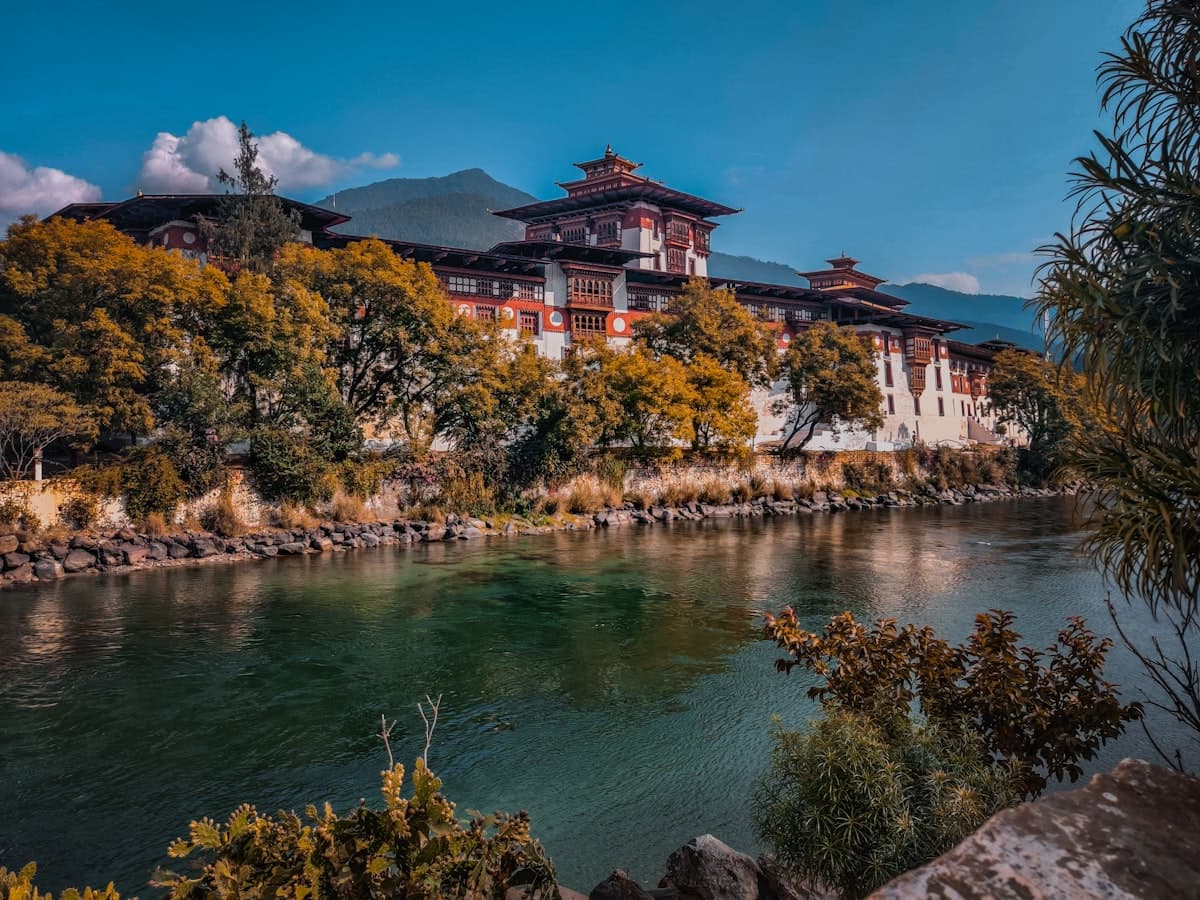
Punakha Dzong sits where two rivers meet. The Mo Chhu (Mother River) and the Pho Chhu (Father River) flow together at the tip of a narrow peninsula, and the dzong rises from that convergence like something that was always meant to be there.
It is, by almost every account, the most beautiful building in Bhutan. And unlike many beautiful buildings, it is not cold. It does not hold you at a distance. It invites you in.
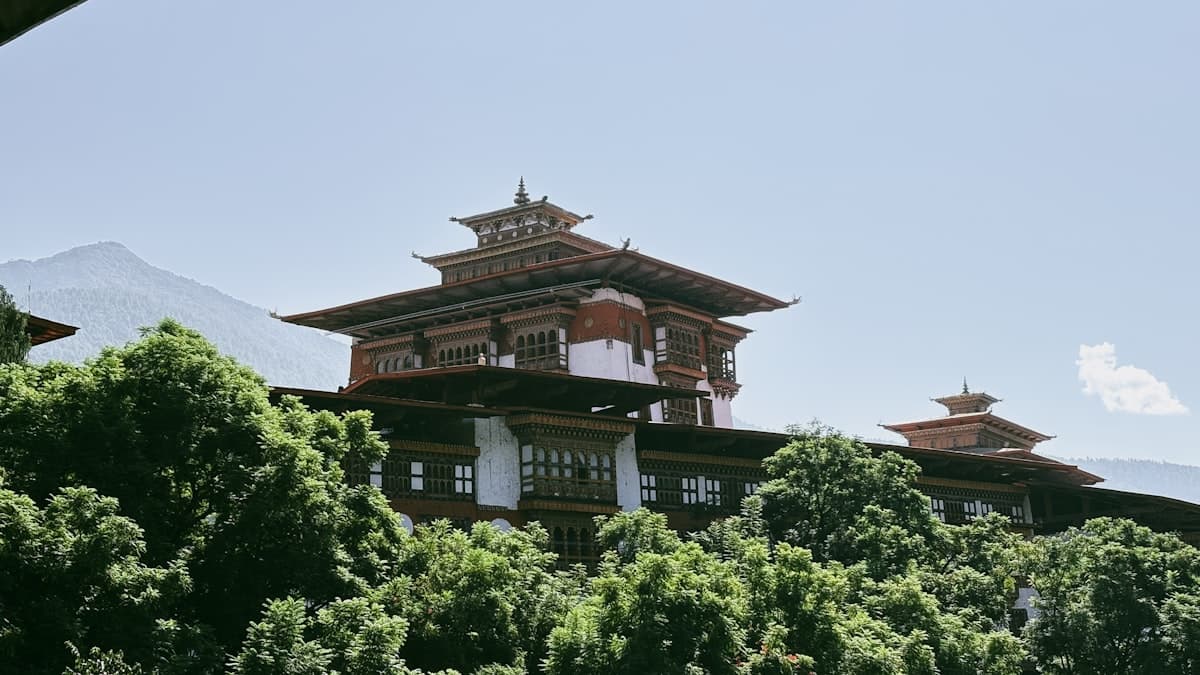
You cross a traditional covered bridge to enter. The courtyard opens into an enormous bodhi tree — ancient, shade-giving, alive. The walls are white with a red-brown band at the top. The woodwork is intricate, painted in golds, reds, greens, blues. In spring, the jacaranda trees bloom purple against the white walls, and the effect is so beautiful it feels fictional.
But what makes Punakha Dzong extraordinary is not its architecture. It is its warmth. This is the dzong where Bhutan's kings have been crowned. It is where the body of the Zhabdrung — the unifier of Bhutan — was kept in state for over a century after his death. It is where young monks study, where festivals are held, where Bhutanese couples come to receive blessings. It is lived-in. It is loved.
The experience here is less solitary than Tiger's Nest, less vast than Phobjikha, less uncertain than Dochula. It is warmer, more human, more rooted in the specific beauty of people caring about a place over centuries. After the effort of climbing and the quiet of valleys, Punakha Dzong reminds you that beauty is also built by hands, maintained by devotion, and shared between people.
Sensory Profile
Noise Level
Crowd Level
Brightnessbright outdoors (river light), moderate inside dzong (painted interiors, butter lamps)
Temperaturemild to warm (Punakha is one of Bhutan's lower, warmer valleys, ~1,200m)
SmellsRiver water, incense, old wood, paint, jacaranda flowers (spring), butter lamps
Unexpected SoundsMonk horns at prayer times (low, resonant, surprising). River rushing. Occasional festival drums if a celebration is underway.
Walking Difficultyeasy
Social ExpectationsRemove shoes in temples. Walk clockwise. Dress modestly. Do not disturb monks at prayer. Some areas are restricted to religious practitioners.
Quiet SpacesYes
Best Time (Low Stimulation)Early morning before tour groups (before 9am). Late afternoon when the light is golden on the white walls.
Sensory data informed by clinical neurodevelopmental expertise.

Mindfulness Activity
Where Two Rivers Meet
A fortress of warmth and devotion at the meeting of two rivers, where beauty is built by human hands and sustained by centuries of care.
Grounding and sensory. A way in.
- 1
The Bridge
A covered cantilever bridge spans the Mo Chhu river. Each step takes you from the ordinary world into something older and more deliberate.
On the covered bridge before entering the dzong, looking down at the two rivers
Look at the two rivers meeting below you. One comes from the north, one from the east. Notice the line where they merge — the colour, the turbulence, the way two become one. Listen to the water.
- 2
The Bodhi Tree
An ancient bodhi tree stands in the first courtyard, its roots gripping stone that was laid six hundred years ago.
Sitting in the main courtyard under the ancient bodhi tree
Sit in the shade. Feel the temperature change between sun and tree-shadow. Put your hand on the ground. Notice that this courtyard has been swept, repaired, and cared for by human hands every day for hundreds of years.
- 3
The Butter Lamp
In the prayer hall, butter lamps flicker in rows. Each one was lit by someone who needed something — peace, healing, guidance, forgiveness.
If lighting a butter lamp inside the temple (or watching others do so)
Watch the flame steady itself. Notice the colour at its base and at its tip. Notice the smell of the butter. Notice how the light moves on the walls around you.
- 4
The Riverbank
Behind the dzong, two rivers meet. The Mo Chhu and the Pho Chhu — the mother and father rivers — join in a single current.
After visiting the dzong, sitting by the water's edge
Listen to the river for two full minutes. Notice that the sound is not one sound but many — layers of rushing, gurgling, hissing, silence. Find the layer that feels most like rest.
For Curious Minds
Punakha Dzong is a living building full of surprises — three distinct courtyards, active monks, intricate painted woodwork, hidden architectural details, and a nearby suspension bridge that provides a physical thrill.
- •Architecture Quest: Punakha Dzong has three courtyards, each with distinct character. Map them. What is different about each one? Where is the oldest section? Where is the newest restoration?
- •Colour Hunt: Find and photograph every distinct colour used in the dzong's painted woodwork. How many can you count? What is the pattern? The traditional colour symbolism is specific — blue, red, green, gold, white each carry meaning.
- •Monk Schedule: If you visit early, observe the monks' morning routine. When do they chant? When do they eat? When do they study? Monasteries have deeply structured daily rhythms — discovering that structure is itself a form of engagement.
- •Suspension Bridge Crossing: The Punakha suspension bridge (one of Bhutan's longest) is nearby. Cross it. It sways. It is draped in prayer flags. The river roars below. This is a 5-minute experience that provides physical sensation, novelty, and a natural adrenaline point.
- •Chimi Lhakhang Walk: A 20-minute walk through rice paddies to the fertility temple — a small, colourful, eccentric temple dedicated to the Divine Madman. The walk provides movement and the temple provides surprise.
Regulation Suggestion
If the dzong's interior density becomes overwhelming, step into the main courtyard and sit under the bodhi tree. The open sky and shade provide immediate sensory relief while keeping you inside the dzong's warm embrace.
What people felt here
“I came here thinking I was lost. I left knowing I was tired. There is a difference.”
📍 Written Here
ReflectionHope
“The jacaranda trees were blooming. Purple against white walls. I did not take a photo because no photo would have been enough.”
📍 Written Here
AweJoy
“My grandmother would have loved this place. I lit a butter lamp for her and told her I was doing okay.”
📍 Written Here
GriefConnection
“Watching the monks pray I understood for the first time that devotion is just love with discipline.”
📍 Written Here
SpiritualityReflection